Cape Coast Castle Museum · Assin Manso · Central Region
Donkor Nsuo: Ghana's Historic Slave River of Remembrance
Ghana's Slave River of Memory and the Last Bath Before the Door of No Return
Tucked away in the quiet town of Assin Manso, in Ghana's Central Region, lies one of the most emotionally charged and historically significant places in the country: Donkor Nsuo, or "The Slave River." This once-unassuming river served as the final resting and cleansing point for enslaved Africans before they were marched to the coast and sold into lives of brutal servitude across the Atlantic. Today, it stands as a living memorial — a place of reflection, remembrance, and reconciliation.
The route from the interior
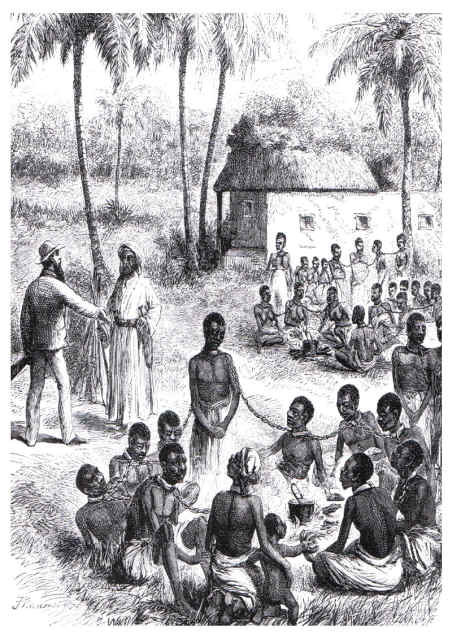
Located less than 100 kilometres inland from the slave castles of Cape Coast and Elmina, Donkor Nsuo was strategically positioned on the slave route that connected the African interior to the European-controlled trading forts. Slaves captured in the northern regions of what is now Ghana — including areas like Northern Ghana, Burkina Faso, and the Kingdom of Dagbon — were forcibly marched for weeks, often in chains, with minimal food or water. Many perished along the way, while those who survived eventually arrived at Assin Manso.
Here, the captives were given what became known as their "last bath" in African waters. This wasn't a ritual of comfort, but a chilling symbolic cleansing, intended to ready them for sale at the coastal castles.
The route in order. The march began at the northern markets — chiefly Salaga, where captives were assembled from across the savannah — and passed through holding camps such as Pikworo near the Burkina Faso border. Donkor Nsuo was the last major stop before the coast. We trace the whole network in Tracing the Slave Routes of Ghana and West Africa.
The stump that holds the secrets
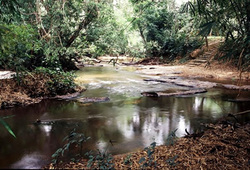
At the river, the captives were washed, sometimes shackled to a large tree stump still visible near the riverbank today. This stump is said to "hold the secrets" of the many men, women, and children who passed through — witnesses to their pain, trauma, and the final moments of freedom on African soil.
There is no plaque on it. No barrier, no glass, no interpretation panel. It is a piece of wood by a river that people were chained to, and it is still standing.
In a country whose heritage sites are increasingly presented and packaged, that counts for something. Nothing has been done to the stump to make it easier to look at.
Ask your guide to show you the stump specifically. It is not always part of the standard walk down to the water, and it is the most direct physical evidence at the site.
From the Gold Coast and Ivory Coast to the Slave Coast
From Assin Manso, they were taken to Elmina Castle and Cape Coast Castle, both serving as major depots in the transatlantic slave trade. Elmina Castle, constructed by the Portuguese in the late 15th century and later taken over by the Dutch and British, was one of the earliest European structures in sub-Saharan Africa. It became a centre of commerce — not only for gold and ivory — but eventually for humans. Here, enslaved people were kept in suffocating dungeons beneath the ground, often for weeks, until a ship arrived.
- History of Cape Coast Castle — where most who left this river ended up.
- The Graves Inside Cape Coast Castle — who is buried within the walls, and who is not.
- Fort William at Anomabo — another major departure point on the same coast.
- Full list of forts and castles in Ghana · Map and context of the Gold Coast
- ElminaCastle.info — our dedicated site on the oldest European building in sub-Saharan Africa.
The Door of No Return
Once a vessel was ready, the captives were marched to the infamous "Door of No Return." This heavy wooden door, set in thick stone walls, opened directly onto the sea or onto boats that ferried the enslaved to awaiting ships.
It is said that no one walks through the door without feeling a surge of sorrow, the palpable weight of untold suffering that clings to its stones. The name itself speaks volumes — no return, no reunion, no hope of home.
The ships themselves are documented on this site: The last known slave trading vessel · The Last Shipment · West African origins of slave bones found.
Who marched them there
Recent historical research and archaeological findings have helped deepen our understanding of this network of suffering. Scholars now confirm that not only were the Fante and other coastal groups involved in capturing and trading enslaved people, but powerful interior kingdoms like Dagbon also played a role, whether through political pressure, economic interest, or under duress.
The trade's complexity reveals a painful truth: the transatlantic slave system was fuelled by both European demand and African complicity.
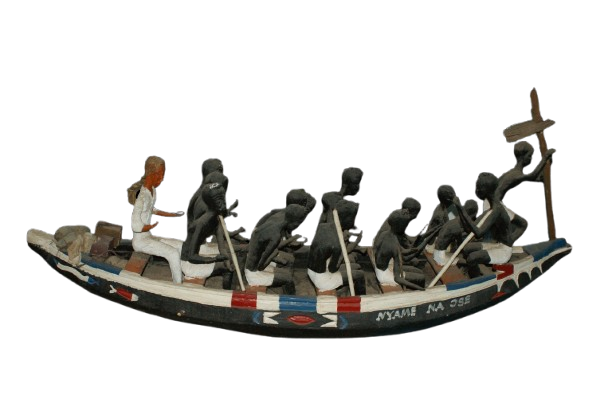
Somebody organised the march from the north. Somebody held the chains for hundreds of miles. Somebody sold the people at this river. They were not Europeans — Europeans waited at the coast.
This is the argument this website exists to make properly, and we make it at length:
Asante and Fante
Ashanti, Fante and the Trans-Atlantic Slave Trade · Cape Coast Castle, the British and the Ashanti Kingdom
Inside the castles
The Untold Role of Local Ghanaians on the Gold Coast — the part the castle tours generally leave out.
The route did not stop at Ghana's modern borders either. See The Dahomey Corridor and The Atlantic Memory Route from Ouidah to Cape Coast Castle.
The bath in reverse
Donkor Nsuo today serves not only as a heritage site but as a spiritual and symbolic place of reconnection. Diaspora descendants from the Americas and the Caribbean come here to honour ancestors, often participating in symbolic "return" ceremonies where they are ceremonially bathed in the river — mirroring, in reverse, the last bath that once marked departure. These events are powerful acts of memory and healing, woven into Ghana's broader commitment to diasporic engagement through initiatives like the "Year of Return" and "Beyond the Return."
The same river. The same act. The opposite direction. It is the most exact reversal available anywhere on this coast, and it is done in water rather than in words.
As Ghana continues to explore and preserve this legacy, Donkor Nsuo remains a quiet but powerful reminder of a global story rooted in one riverbank — a place where sorrow met survival, and where memory now seeks peace.
- Year of Return · Rashad McCrorey gives the details
- A Complicated Return: The Irony and Healing — because it is not simple, and pretending otherwise helps nobody.
- Tracing the Slave Route: Legacy and Kinship Research — for those seeking an actual line rather than a feeling.
- Haiti ↔ Ghana: The Transatlantic Bridge of Memory — the other end of the same water.
Ghana has not always matched the ceremony with the care. We have said so publicly and we stand by it: Open Letter: Ghana's History Deserves More Than Logos and Lip Service. A river with a stump beside it and no plaque on it is part of that argument.
Visiting Donkor Nsuo
Where it is
Assin Manso, Central Region — around 40 km from Cape Coast on the Cape Coast–Kumasi highway, and under 100 km inland from the castles. Directly on the road between the coast and Kumasi.
Go before the castles
Coming down from the interior and arriving at the coast follows the actual direction of travel. The dungeons land very differently once you have already stood at this water.
What is there
A walled compound with the history set out, a trail down to the river, the stump, ancestral graves, and the Memorial Wall of Return where visitors from the diaspora write their names. Quiet and unpackaged.
If you are from the diaspora
Many people find this harder than the castles precisely because it is quieter — there is no architecture between you and the water. Do not come alone if you can help it, and leave the rest of the day empty.
Photography
Permitted, but read the room. At the river and at the graves there will be people having a profound personal experience. Photographing strangers in that moment is intrusion, not documentation.
Combining it
Pairs naturally with Kakum National Park for a day out of Cape Coast, though the two could hardly differ more in tone.
Guided tours
Some Cape Coast and Elmina trips include Assin Manso and some do not — check the itinerary before booking, because it is the stop most often dropped to save an hour. If you are arranging your own driver between Kumasi and the coast, it costs almost nothing to include and changes the meaning of the whole day.
See also our own Guided Tours of 6 Forts and Castles. We may earn a commission when you book a recommended tour, at no extra cost to you. No operator has paid to appear on this page.
Connected reading
- Assin Manso: the last bath, and why they were fed first — our companion page on the depot, the market, the branding and the two ancestors returned in 1998.
- Ghana, the Slave Trade and Historical Legacy · A Dark History
- Asafo Flags of the Fante — the military companies of the coast, and what they recorded.
- Old Pictures of Cape Coast and Area
- CapeCoastCastle.com — our sister site on the castle itself.
- Forts & Castles of Ghana · GhanaMuseums.com
Reviewed . Published on CapeCoastCastleMuseum.com, online since October 2008. Donkor Nsuo, also recorded as Nnonkonsuo, lies at Assin Manso in Ghana's Central Region, less than 100 kilometres inland from Cape Coast and Elmina, on the route connecting the African interior to the European trading forts. The march of captives from northern Ghana, present-day Burkina Faso and the Kingdom of Dagbon; the washing at the river as preparation for sale rather than a ritual of comfort; and the tree stump at the riverbank to which captives were shackled and which remains visible today, reflect the documented record and long-standing local testimony. The involvement of Fante and other coastal groups, and of interior kingdoms including Dagbon, is supported by historical research and archaeological findings and is set out more fully on the pages linked above. Symbolic return ceremonies in which visitors of African descent are bathed in the river form part of Ghana's engagement with the diaspora through the Year of Return and Beyond the Return. Entrance arrangements, guiding and access change without notice — confirm locally before travelling. All photography © Remo Kurka. Usage strictly by prior authorisation only.