Cape Coast Castle Museum · Komenda · Central Region
Fort Komenda
Two Rival Forts on One Stretch of Beach
The British built here in 1682. The Dutch built Fort Vredenburgh a few hundred metres away. What followed were the Komenda Wars — fought by two European companies, and largely decided by the African rulers and traders whose land they were standing on. Nowhere on this coast shows more plainly how the trade actually worked.
Two forts, a few hundred metres apart
Komenda sits on the central coast of Ghana, west of Elmina and Cape Coast. It is one of the many sites where European powers built between the fifteenth and nineteenth centuries along the Gold Coast — and one of the strangest.
The Portuguese arrived first, in the fifteenth century. But it was the Dutch and the British who established a lasting presence here.
The British built the original fort in 1682, as a trading post for gold, ivory and, later, enslaved people.
Then, in an unusual historical episode, two rival forts were built within a few hundred metres of each other — one British, one Dutch — each competing for control of the same trade.
- Fort Komenda — British.
- Fort Vredenburgh — Dutch, built nearby. The name means peace fortress, which given what happened next is worth a moment.
The close proximity of the two produced frequent clashes and shifting alliances with local African powers. That last phrase is the important one, and most accounts leave it as a throwaway. It was not a throwaway. It was the deciding factor.
The Komenda Wars
In the 1690s, the rivalry at Komenda turned into a series of open conflicts — the Komenda Wars, fought between the Dutch West India Company and the English Royal African Company, on and around this beach.
They are sometimes described as the first sustained European war in West Africa. They are more accurately described as European companies going to war inside an African political situation they did not control.
What they were fighting over
Trade access. Whoever held Komenda held a share of the gold and, increasingly, the traffic in people moving down to this stretch of coast. It was a commercial war conducted with artillery.
Who else was involved
The Eguafo Kingdom, in whose territory Komenda sat, and the Komenda rulers themselves. Neither company could hold a position without local consent, supply or alliance.
How it was settled
Not by European victory alone. Alliances shifted, African rulers backed whichever side served their interests at that moment, and the outcome followed those decisions.
What it cost
The wars devastated the area repeatedly, and Komenda never became what either company had hoped. Two forts, years of fighting, and neither ended up dominant.
Who actually decided
This is why Komenda matters more than its ruined walls suggest, and why it belongs on this site rather than in a list of picturesque coastal remains.
The standard picture of the Gold Coast has Europeans arriving, building, taking and dictating. Komenda does not fit it. Here, two European powers fought each other to a standstill while the people who lived here chose sides, changed sides, and profited from both.
European companies could not hold this coast without African consent. At Komenda that is not an argument — it is what the record shows happened.
John Cabess
The African merchant of Komenda who became one of the most powerful traders on the coast, allied with the English, supplying and shaping the situation the companies fought over. He is the single clearest refutation of the passive-Africa picture. Read his story.
King Ofosu of Komenda
The Komenda ruler whose decisions the Europeans had to work around rather than override. Read about him.
The uncomfortable half
Agency runs both ways. African rulers and merchants who could decide which European company held a fort could also decide who was sold through it. Both facts belong in the same paragraph. See The Untold Role of Local Ghanaians on the Gold Coast.
The kingdoms
Eguafo here, Denkyira inland, and later the Asante and Fante. These were states with armies, revenues and foreign policies. See The Kingdoms of Ghana.
The slave trade at Komenda
Like the other forts on this coast, Fort Komenda became involved in the transatlantic slave trade. Enslaved Africans captured inland were brought here and held in dungeons before being shipped across the Atlantic to the Americas.
The fort served as a point of commerce and of oppression — the two were the same operation, run from the same rooms.
Komenda is a smaller building than the great castles, and that is instructive. The trade did not run only through Cape Coast and Elmina. It ran through dozens of positions like this one, each holding people in modest dungeons until a ship came. The scale of the trade is not visible in any single fort — it is visible in how many of them there were. See our full list of forts and castles in Ghana.
Where the people held here came from is traced on our route pages: Tracing the Slave Routes of Ghana and West Africa, and the last inland stop before the coast at Donkor Nsuo.
Decline, recognition, ruin
With the abolition of the slave trade and the shifting of colonial interests, Fort Komenda lost most of its strategic and commercial value during the nineteenth century. It fell into decline.
In 1979, Fort Komenda — along with more than thirty other forts and castles along the Ghanaian coast — was inscribed on the UNESCO World Heritage List, as part of a broader recognition of these structures as critical evidence of European colonialism and the transatlantic slave trade.
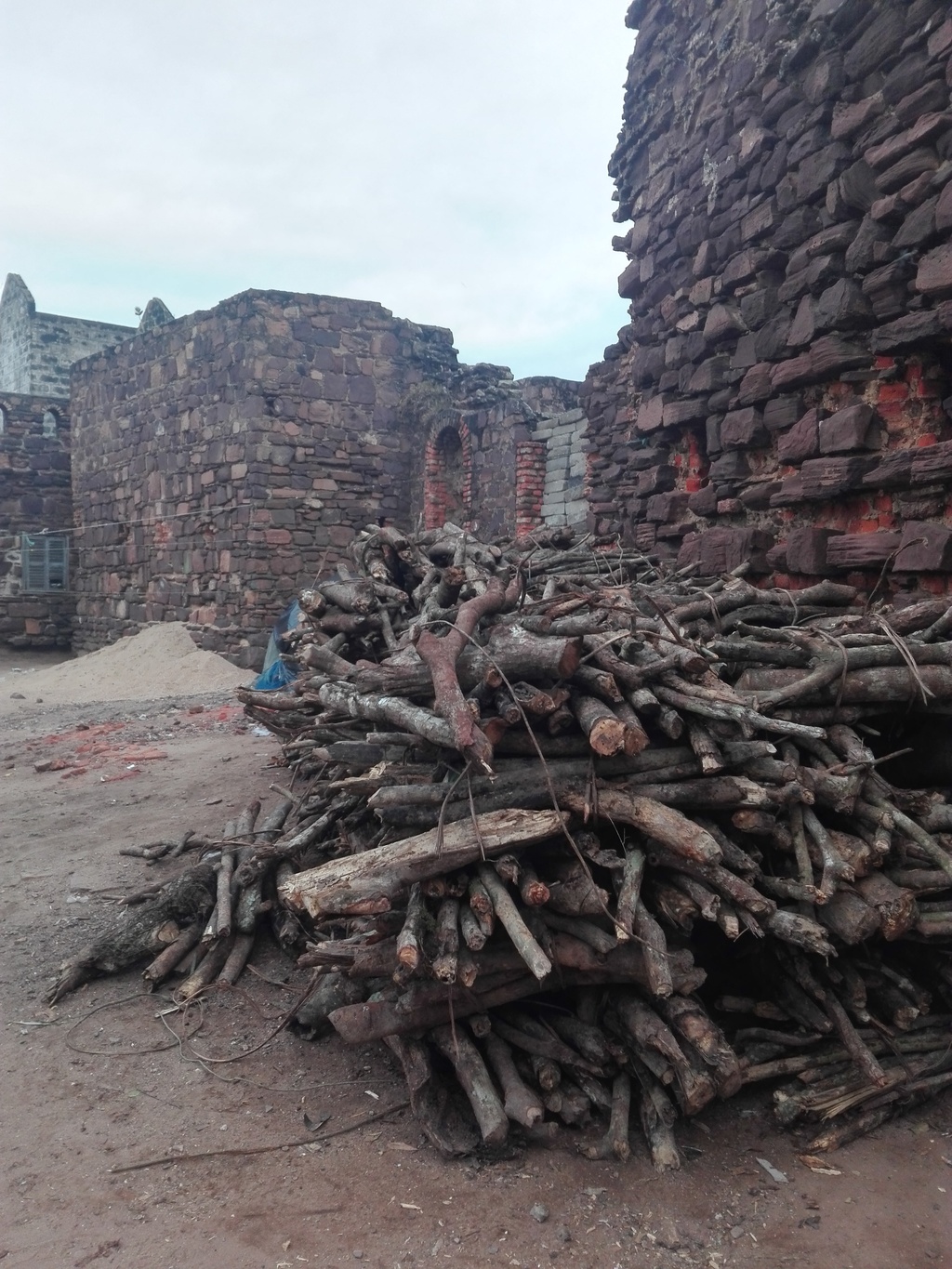
Today it stands as a ruin, though many of its walls and features remain visible. It is managed by Ghana's Museums and Monuments Board, and although far less visited than Cape Coast or Elmina, it remains accessible to visitors.
Efforts have been made in recent years to restore and preserve the site, both to honour its historical importance and to support cultural tourism in the Central Region.
Fort Komenda is a symbol of intense European rivalry on the African coast, a testament to the devastating impact of the slave trade on African societies — and evidence of the resilience of local communities who continue to preserve and reinterpret these sites as part of Ghana's heritage.
Inscription is not funding. A World Heritage listing covering thirty-odd structures has produced restoration at two of them and neglect at most of the rest. We have written about that gap: Open Letter: Ghana's History Deserves More Than Logos and Lip Service.
Visiting
Where it is
The town of Komenda, on the central coast west of Elmina and Cape Coast. Easily reached as a detour if you are travelling the coastal road, and almost never included in an itinerary.
Look for both
The British fort and the Dutch Fort Vredenburgh stood a few hundred metres apart. Finding both, and seeing how close they were, is the point of the visit — it makes the wars instantly comprehensible.
It is a ruin
Walls and features remain, but this is not a restored monument. Wear proper shoes, watch your footing, and do not climb on anything that looks unsure.
Access
No fixed hours to rely on. Ask in the town — someone will have the key or know who does, and a small payment is customary. Go in the morning.
Combine it
With Elmina, half an hour east, and with the Cape Coast hill forts. A day along this coast covers more history per kilometre than anywhere else in West Africa.
Our dedicated site
We maintain a full site for this fort with more detail and photography: fortkomenda.ghana-net.com.
Guided tours
No published itinerary we know of includes Komenda — it is a detour, and detours do not sell. For the castles, Elmina and the coastal run, an organised day removes the transport problem, and a driver will usually add Komenda if you ask.
See also our own Guided Tours of 6 Forts and Castles. We may earn a commission when you book a recommended tour, at no extra cost to you. No operator has paid to appear on this page.
Connected reading
The people who decided
- John Cabess — the African merchant of Komenda who shaped what the Europeans were fighting over.
- King Ofosu of Komenda — the ruler they had to work around.
- The Untold Role of Local Ghanaians on the Gold Coast
The kingdoms
- The Kingdoms of Ghana · Major Ghanaian Kingdoms Involved in the Slave Trade
- The Denkyira Empire · Denkyira and the Transatlantic Slave Trade
- Ashanti, Fante and the Trans-Atlantic Slave Trade · Asafo Flags of the Fante
The other forts
- fortkomenda.ghana-net.com — our dedicated site for Komenda.
- Fort William, Cape Coast · Fort Victoria · Fort Royal
- Fort William at Anomabo · History of Cape Coast Castle
- ElminaCastle.info · CapeCoastCastle.com · Forts & Castles of Ghana
- Map and Context of the Gold Coast · Old Pictures of Cape Coast and Area
Reviewed . Published on CapeCoastCastleMuseum.com, online since October 2008. Fort Komenda stands in the town of Komenda on the central coast of Ghana, west of Elmina and Cape Coast. The Portuguese were the first Europeans in the area in the fifteenth century; the British built the original fort on the site in 1682 as a trading post for gold, ivory and later enslaved people. Dutch and British rivalry led to two rival forts being built a few hundred metres apart — the British Fort Komenda and the Dutch Fort Vredenburgh — producing frequent clashes and shifting alliances with local African powers. The Komenda Wars of the 1690s were fought between the Dutch West India Company and the English Royal African Company; the Eguafo Kingdom and the Komenda rulers were central to their course and outcome. Enslaved Africans captured inland were held here before shipment across the Atlantic. Fort Komenda declined in the nineteenth century and was inscribed on the UNESCO World Heritage List in 1979 with more than thirty other Ghanaian forts and castles. It stands today as a ruin with many walls and features visible, managed by Ghana's Museums and Monuments Board, with restoration and preservation efforts undertaken in recent years. Access arrangements at Ghana's smaller forts vary and change without notice — confirm locally before travelling. All photography © Remo Kurka. Usage strictly by prior authorisation only.